LEXINGTON, Va. – Sustainability efforts at Washington and Lee University have improved in recent years, and having them included in the strategic plan was ‘huge,’ said the university’s director of sustainability initiatives and education, Kim Hodge.
Hodge said that when she took the position, it was a struggle to get members of the Washington and Lee community to participate in sustainable practices, but recently, that’s changed.
“I feel like it’s gone from me pushing the envelope to students and faculty members pushing me. Which is awesome,” she said. “I feel like the momentum has definitely picked up over the past few years.”
One of the most exciting changes, Hodge said, was being written into the Washington and Lee Strategic Plan.
“It was huge to get environmental work and sustainability written into the entire university strategic plan, because it wasn’t before,” she said. “And I think that was kind of used as an excuse for why we didn’t do things, so there’s momentum and it’s like this big log rolling down a hill now.”
The strategic plan, which was adopted last May, lists environmental stewardship as an initiative. According to the plan, this encompasses formulating a strategy to meet environmental commitments, continuing to work toward LEED-certified standards and finding ways to minimize consumption and waste.
Hodge said that through the strategic plan, they should be able to meet their commitments.
“There are 5 or 6 different things that go into our greenhouse gas report, electricity is only one of them, but it’s like the biggest chunk of it. So if we can source all of that from alternative fuels then that would be really great,” said Hodge. “We’re looking at a couple of other things, like 100 percent of electricity from renewable sources, can we reduce transportation costs … can we reduce waste minimization, what’s the flow of our waste coming in and off of campus. Those things will help us get to our carbon neutrality goal of 2050.”
One way that the university is working toward these goals is through the Compost Crew. The Compost Crew was started in 2002 with a small group of students.
Members of the Compost Crew pick up food waste from university dining facilities and take it to the University Garden to be composted. The University Garden then provides fruits and vegetables to university dining.
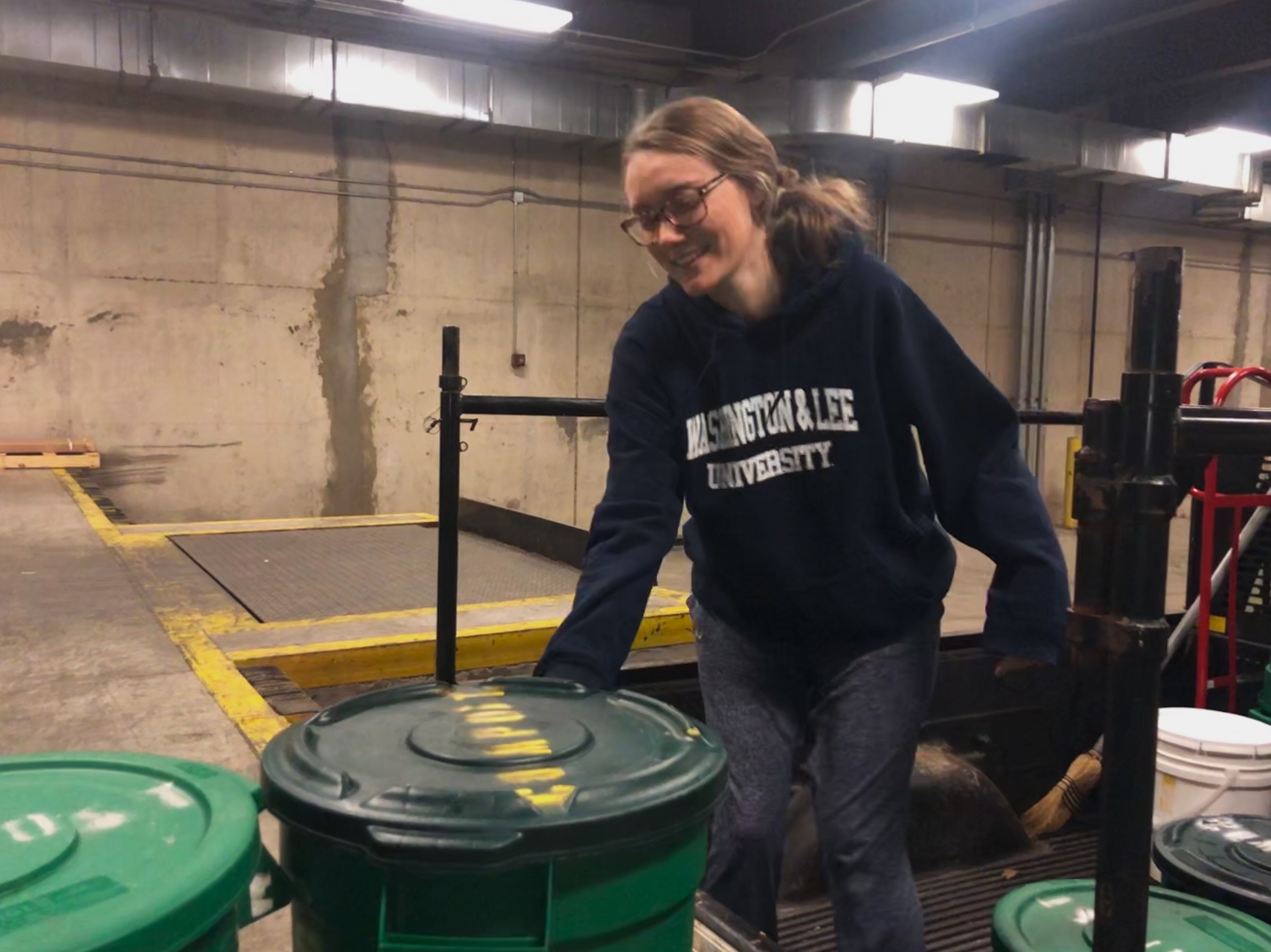
“When I got here we had this thing called an earth tub, which was basically like a giant bin. I don’t know, it was huge, and it had this auger in the middle that had to be hand-cranked and it would get full, like, two thirds of the way through the semester. And it smelled atrocious, compost doesn’t generally smell very good. And there were, like, five people on the compost crew,” said Hodge, who also oversees the Compost Crew. “We were able to build an industrial compost system that is crazy … I think we’re the only [ industrial compost system] at a university in Virginia, which is amazing.”
Washington and Lee sophomore and Compost Crew member Alexis Kriegh said that the increase in compositing is the biggest change she’s seen on campus.
“Almost all packaging is compostable too and like silverware and the bowls and everything, and that’s made such a big difference to, like, reducing the waste coming out of Dining Services,” Kriegh said. “It’s a really great cause to have a green campus and have the smallest environmental footprint possible.”
At the Office of Student Affairs’ annual Leadership Education and Development, or LEAD, Banquet on March 31, the Compost Crew was presented with the Greenest Group Award.
Hodge said that when Jennifer Hickey, the new director of Dining Services, was hired, Hickey made the decision to switch to compostable single-use silverware, cups and takeaway containers.
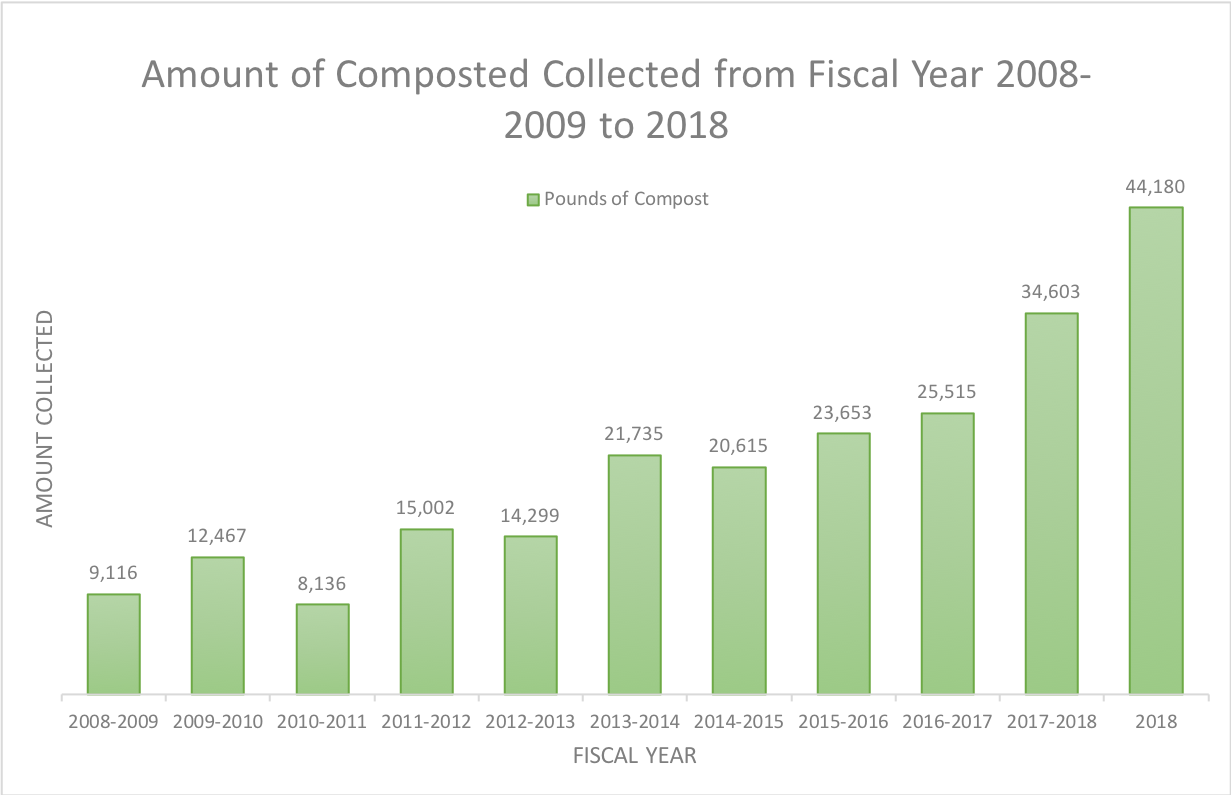
Although not at a constant rate, since fiscal year 2008-2009, the amount of compost collected by the Compost Crew has increased. Between August and December 2018, the amount of compost collected increased by nearly 10,000 pounds compared to fiscal year 2017-2018. Hodge attributed the increase to better weighing measures and the new compostable ware.
Washington and Lee junior Mikki Whittington, one of Hodge’s sustainability interns, said that one issue with the compostable ware is that it’s not recyclable in the United States.
“We end up sending a lot of our recyclables to China to be recycled, but China doesn’t want to take our recycling,” said Whittington. “We only have the ability to recycle things with numbers one and two, and unfortunately the compostable ware is a number seven, so by having these compostable bins out, we are directing these takeaway containers into our compost system and into our garden, as opposed to directing them into the landfill where they won’t break down.”
Whittington noticed that a lot of students were throwing the compostable cups and silverware into recycling bins, and that’s when she requested a compost bin for her sorority house.
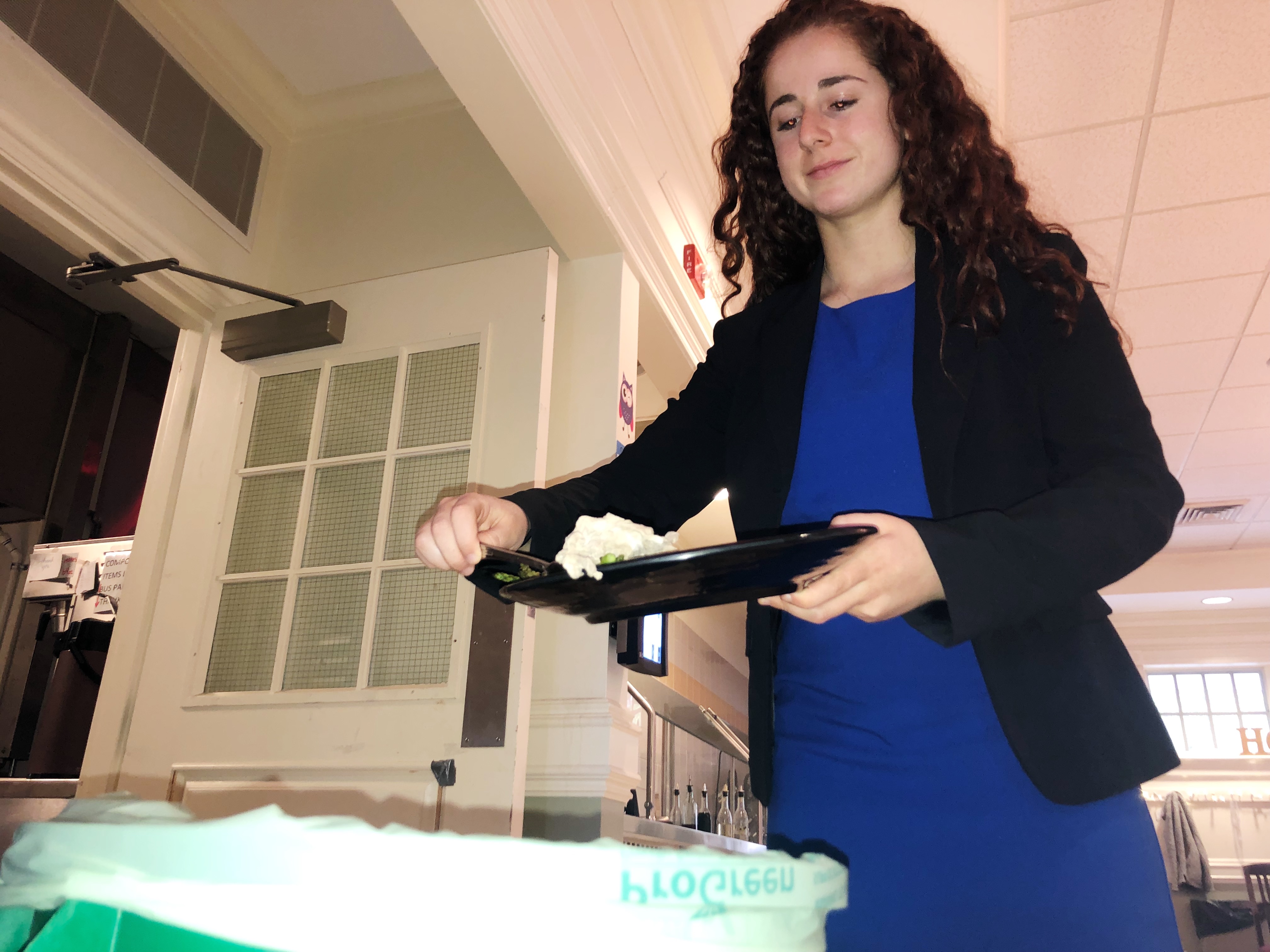
Any theme, sorority or fraternity house or on-campus dining facility can request a compost bin so students don’t mistakenly recycle their compostable ware.
Washington and Lee students are also making their events are earth-friendly.
With Washington and Lee Mock Convention, a convention held every four years aimed at predicting the presidential nominee for the out-of-power party, coming up in 2020, members wanted to get in on the sustainability action. They hired Washington and Lee junior Kaitlyn Fitzsimmons to be the first sustainability chair.
“Clearly the Democratic Party has a strong association with the environmental and climate change platform,” said Fitzsimmons, “so the leaders of Mock Con 2020 really wanted to make this a part of their platform.”
Hodge said that she has been in close contact with Fitzsimmons to brainstorm ways to help Mock Convention go green.
“[Fitzsimmons] comes in here and we brainstorm, and she takes it to the committee, and they are like running with it, it’s amazing,” Hodge said.
Fitzsimmons has been meeting with other committees within Mock Convention to ensure the most sustainable practices surround the event.
“I’ve met with a lot of people who do marketing and who are ordering supplies for events, so that’s everything from like not printing out fliers and just using more like Instagram or online platforms to reduce waste, or all of our events are sustainable-minded,” said Fitzsimmons. “We’re renting out used furniture for the gala and convention, we’re getting trees that we’re going to then replant and compost. Since it’s earth month, MockCon has dedicated a week to sustainability on Instagram.”
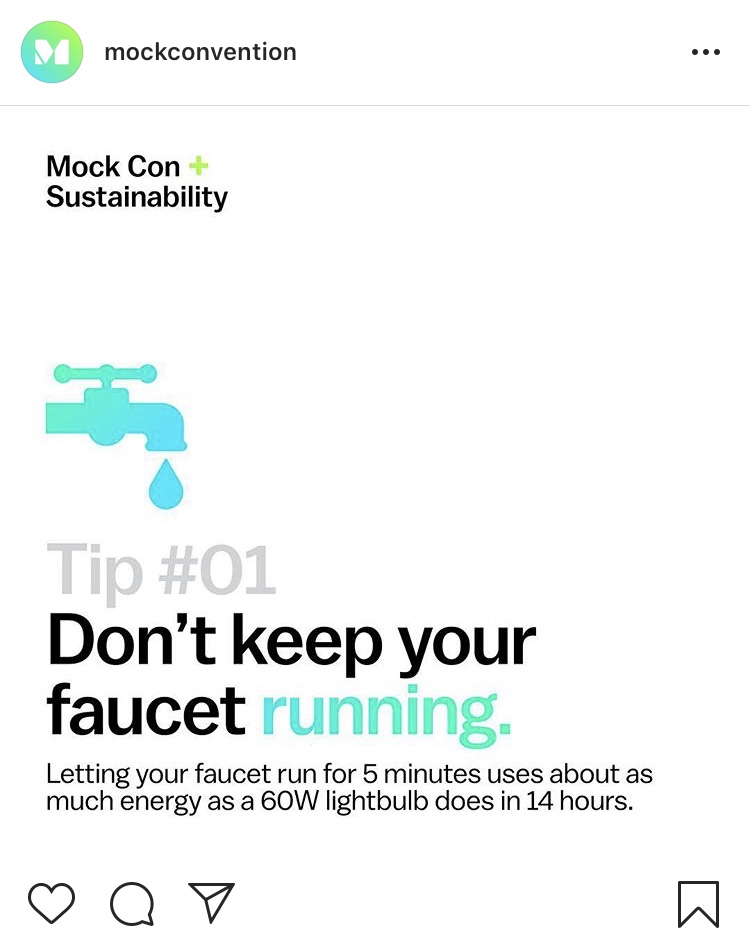
The Mock Convention Instagram has done everything from making its logo green to posting tips for leading a more sustainable life.
Washington and Lee’s goals are to decrease greenhouse gas production by 20 percent by 2020 and achieve carbon neutrality by 2050. Hodge is excited to see how the campus changes over the years.
“So much is changing, and the university’s been really supportive … other people are fully bought into this, and they like to support it because it means something to them, so I’m not pushing so much anymore,” said Hodge. “I know we have a lot of work to do, but there’s a lot of heart, and a lot of great people here.”
To hear more about composting at Washington and Lee, listen here:
 Annie Echols